Advertisements
Here’s a wild stat that honestly blew my mind: roughly 3 million adults in the U.S. use melatonin regularly, yet most of them are taking way too much at the wrong time. I know because I was one of them! For years, I’d pop a 10mg tablet right before bed, wonder why I felt groggy the next morning, and then blame melatonin for “not working.” Turns out, getting your melatonin dosage and timing right is everything — and once I figured that out, my sleep quality changed dramatically.
What Melatonin Actually Does (It’s Not a Sleeping Pill)
So here’s the thing most people get wrong — melatonin isn’t a sedative. It’s a hormone your brain already produces naturally when it gets dark outside, basically signaling to your body that it’s time to wind down. Think of it more like a sleep signal booster than a knockout drop.
When I first learned this from my doctor a few years back, I felt kinda dumb. I’d been treating melatonin supplements like they were prescription sleep aids, expecting them to knock me out cold. But that’s not how your circadian rhythm works, and understanding that was honestly a game changer for me.
The Right Melatonin Dosage: Less Is Seriously More
Okay, this is where I messed up big time for years. I was taking 10mg because the bottle at the drugstore said I could. But according to the Sleep Foundation, most adults only need between 0.5mg and 5mg — and many sleep researchers actually recommend starting at just 0.5mg to 1mg.
Here’s what I wish someone had told me sooner:
- Start low — try 0.5mg or 1mg and see how your body responds.
- More melatonin doesn’t mean better sleep. Higher doses can actually make you feel more restless and groggy.
- If 1mg doesn’t help after a week, bump it up to 3mg. But honestly, going above 5mg rarely helps most people.
- Kids need even less — usually 0.5mg to 1mg, and only after talking to a pediatrician.
When I dropped from 10mg down to 3mg, I couldn’t believe how much better my mornings felt. No more brain fog. No more hitting snooze five times. It was like my body finally responded properly to a reasonable dose.
When to Take Melatonin: Timing Is Everything
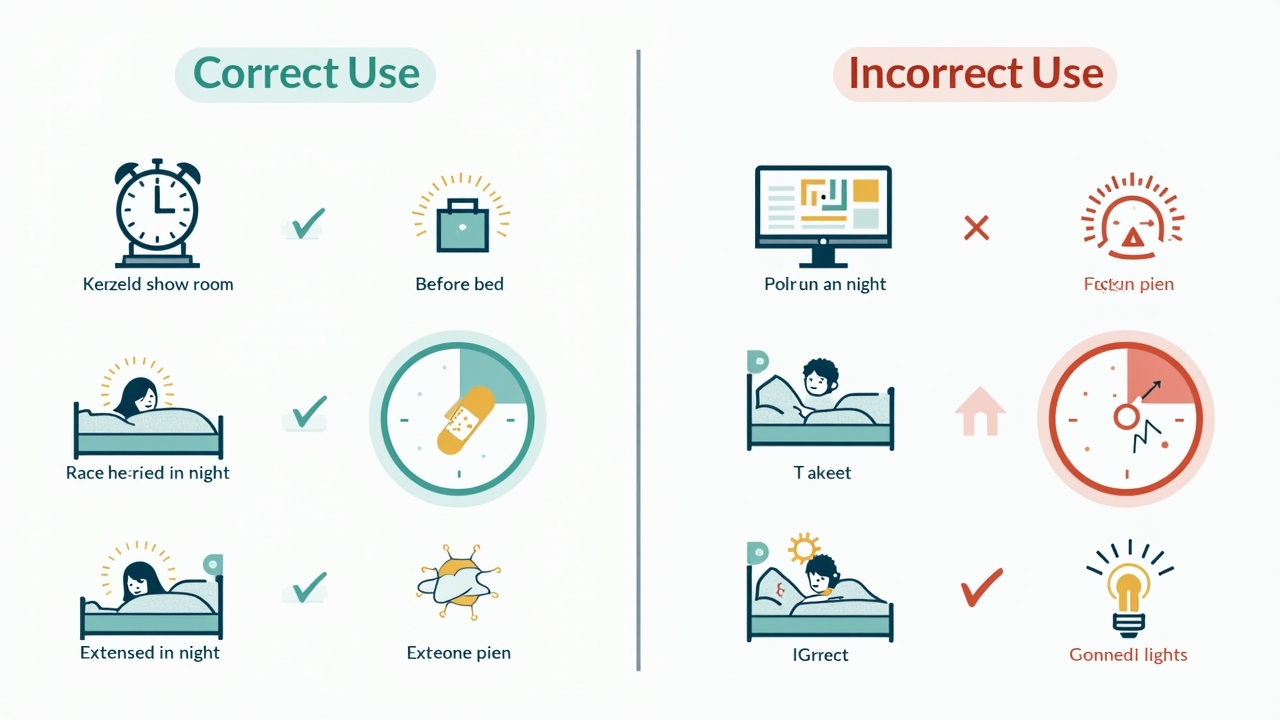
This was my other big mistake. I used to take melatonin literally as my head hit the pillow. Wrong move. The optimal timing for melatonin is about 30 to 60 minutes before your desired bedtime, according to Mayo Clinic.
Advertisements
Your body needs that window to absorb it and let it start working with your natural sleep-wake cycle. I started setting a phone alarm for 45 minutes before bed — sounds nerdy, I know — but it made a massive difference in how quickly I fell asleep.
For jet lag, the timing shifts a bit. If you’re traveling east, you’d take melatonin in the evening at your destination’s local time for a few days. Traveling west? Some folks take it in the morning, but honestly that gets confusing and it’s worth chatting with your doctor about.
Common Mistakes That Wreck Your Results
Besides dosage and timing, there’s a few other traps I fell into. Staring at my phone in bed right after taking melatonin was a big one — blue light basically tells your brain to suppress melatonin production, which defeats the whole purpose. Also, taking it with alcohol is not recommended since alcohol disrupts your sleep architecture anyway.
Another thing? Consistency matters. Taking melatonin randomly on and off didn’t do much for me. When I committed to the same low dose at the same time every night for two weeks, that’s when the real improvement in sleep onset happened.
Your Sleep Journey Starts With Small Changes
Look, getting melatonin dosage and timing dialed in isn’t complicated — it just requires a little patience and willingness to start small. What worked for your friend or that random Reddit thread might not work for you, and that’s totally fine. Always talk to your healthcare provider before starting any supplement, especially if you’re pregnant, on medication, or giving it to a child.
If this helped you out, there’s a ton more practical sleep tips waiting for you over at Sleepora Lab. We’re all about helping you sleep better without the overwhelm — so go poke around, and let us know what topics you’d like us to cover next!