Advertisements
Here’s a fun fact that honestly kept me up at night when I first read it — roughly 50% of insomnia cases are linked to anxiety or other mental health conditions, according to the Sleep Foundation. Fifty percent! That number hit me hard because I’ve been one of those people, staring at the ceiling at 2 AM while my brain decided it was the perfect time to replay every embarrassing thing I’ve ever said since middle school.
If you’ve ever dealt with insomnia and anxiety happening at the same time, you know exactly what I’m talking about. It’s like they’re best friends who feed off each other, and honestly, understanding that connection was a total game-changer for me.
The Vicious Cycle That Nobody Warns You About
So here’s the thing I wish someone had told me years ago. Anxiety causes sleeplessness, and then sleeplessness makes your anxiety worse. It’s this brutal feedback loop that can spiral real fast if you don’t catch it.
I remember one period in my life — maybe four or five years ago — where I was so stressed about a work deadline that I couldn’t fall asleep. Then the next day I’d be exhausted, which made me anxious about not performing well, which then made me unable to sleep again that night. It was maddening.
What’s actually happening in your body is that stress hormones like cortisol stay elevated when you’re anxious, and that basically tells your brain to stay on high alert. Your nervous system gets stuck in fight-or-flight mode. The Harvard Health Blog explains this really well if you want to dig into the science behind it.
What Actually Helped Me Break the Pattern
Okay, I’m not a doctor. Let me just say that upfront. But after years of trial and error — and yeah, some pretty dumb mistakes — I found a handful of strategies that genuinely worked for my sleep anxiety.
First up, cognitive behavioral therapy for insomnia, or CBT-I. I was skeptical at first because it sounded too clinical, but this approach is actually considered the gold standard treatment for chronic insomnia by the American Psychological Association. It basically retrains your brain to associate the bed with sleep instead of worry.
Advertisements
Second thing that was a game-changer? A wind-down routine. I know, I know — everybody says this. But I’m talking about being almost annoyingly consistent with it. No screens 45 minutes before bed, a cup of chamomile tea, and ten minutes of deep breathing exercises. Boring? Sure. Effective? Absolutely.
A Few More Quick Tips That Made a Difference
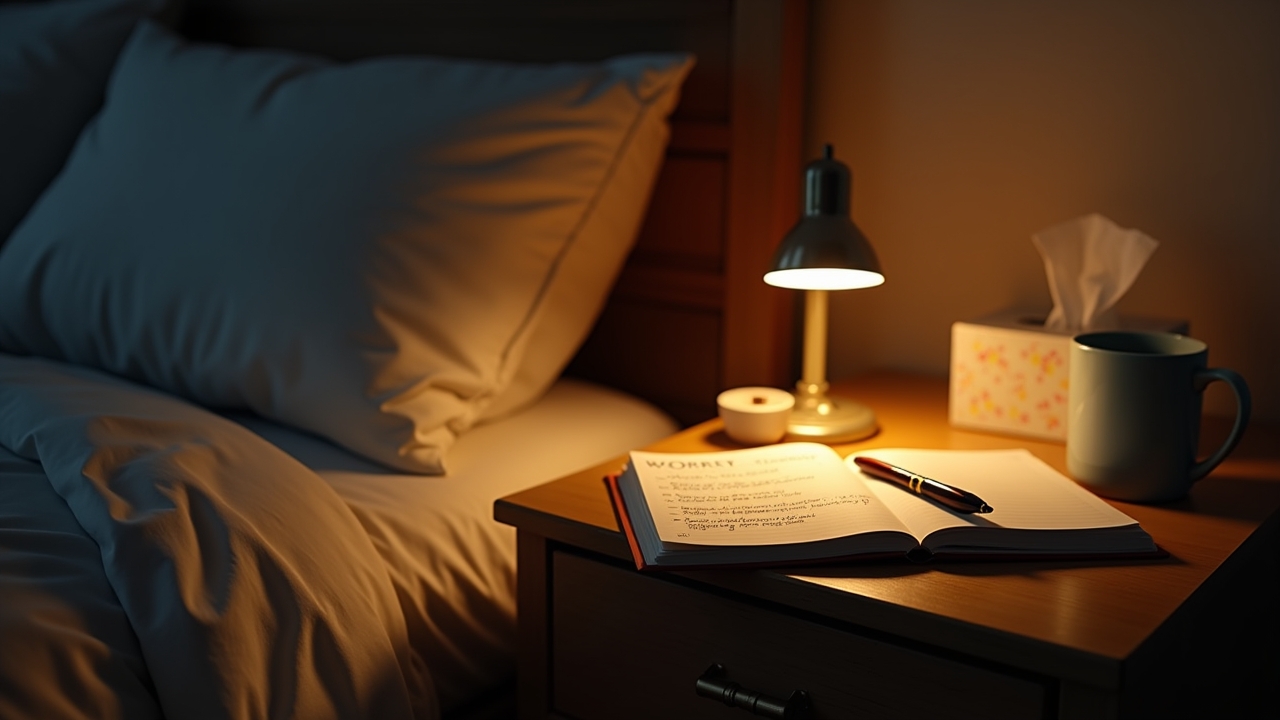
- Journaling before bed to “dump” anxious thoughts onto paper — this one felt silly at first but it works surprisingly well.
- Keeping the bedroom cool, around 65-68°F, because your body temperature actually needs to drop for quality sleep.
- Avoiding caffeine after noon — I learned this the hard way after convincing myself that a 3 PM espresso “didn’t affect me.”
- Progressive muscle relaxation, where you tense and release each muscle group. It sounds weird but it physically calms your nervous system down.
When It’s Time to Talk to a Professional
Here’s where I gotta be real with you. If your nighttime anxiety and sleep problems have been going on for more than a few weeks and they’re messing with your daily life, please talk to a healthcare provider. I waited way too long to do this myself, and I regret it.
Sometimes anxiety-related insomnia needs more than lifestyle tweaks. A sleep specialist or therapist can identify underlying sleep disorders or generalized anxiety disorder that might be driving everything. There’s absolutely no shame in getting help — I actually think it’s one of the bravest things you can do.
Your Sleep Is Worth Fighting For
Look, dealing with insomnia and anxiety simultaneously is exhausting in every sense of the word. But the connection between the two means that improving one often improves the other, and that’s actually pretty hopeful when you think about it.
What works for me might not work perfectly for you, and that’s totally fine. Customize these strategies, experiment a little, and be patient with yourself. Just please don’t self-medicate or ignore persistent symptoms — your mental health and sleep health deserve proper attention.
If you found this helpful, make sure to check out more posts over at Sleepora Lab where we dive deep into all things sleep, relaxation, and getting your nights back on track. You deserve a good night’s rest — and honestly, so does your overworked brain.